Let’s zoom in on the nuance of surfing waves and get a little more technical…
We are moving along on our waves
Working with the current conditions
Things are going ok...
Could be better but doing the best we can with what we have.
Then, we notice a nice set of waves beside us.
Maybe not right next to us but within our peripheral view.
To better align with our goals for surfing and chosen destination,
We think,
"Let's surf those waves over THERE
Rather than the ones HERE where we are."
So just jump, right?
Not so fast.
The sea is full of “Jumpers,”
People who abruptly abandoned where they were
Believing they discovered the magic shortcut
To get to the new destination
More quickly.
These mistaken Jumpers not only fail
In transitioning more quickly
But expend - and waste - more energy
When they choose to jump.
Expend and waste more than whom?
The Linkers.
Linkers of Waves
Patiently and thoughtfully
Transition from one wave to the next
With more strategy, efficiency, and success
Than Jumpers.
Why?
Because Linkers lean into Boyan’s Golden Rule of Surfing:
Regardless of where you want to go, surf the wave you are on to the best of your ability.
Here, we counterintuitively capture valuable Free Energy from our current wave
That propels us onto adjoining waves
With more acceleration, momentum, and opportunity
That Jumpers give away
When they jump from a similar wave.
In the process of change,
Less Jumping
And
More Linking
Build
Consistency in Transitions
That lead to
Invigorating Transformation.
With gratitude, Joe

Joe Jacobi
Olympic Gold Medalist, Performance Coach & Author
Unlock Your Why, Achieve Impacting Wins, & Ride Spectacular Life Waves
Ready to position the art of surfing waves as a process for deep reflection and meaningful life transitions?
Subscribe to Thinking In Waves, my short weekly essay about the lessons and experiences that I learn surfing offshore waves on a surfski kayak transferred to an innovative model for clear thinking and better choices <— Short, fun, and memorable - new riders are always welcome!
(Updated July 1, 2026, from Llançà, Catalunya on the Costa Brava)
Does Success Equal Happiness?
I've cut WAY BACK on podcast guesting over the past seven months. But when my friend, Vyoma Nupur, told me she was launching a new podcast about happiness AND asked if I would be the first guest, I immediately agreed.
And I'm so glad I did! We had a lot of fun exchanging ideas in a conversation that is going to offer reflection, guidance, and deeper curiosity on a topic about which we cannot stop thinking. Please enjoy:
On The Keynote Stage in Barcelona
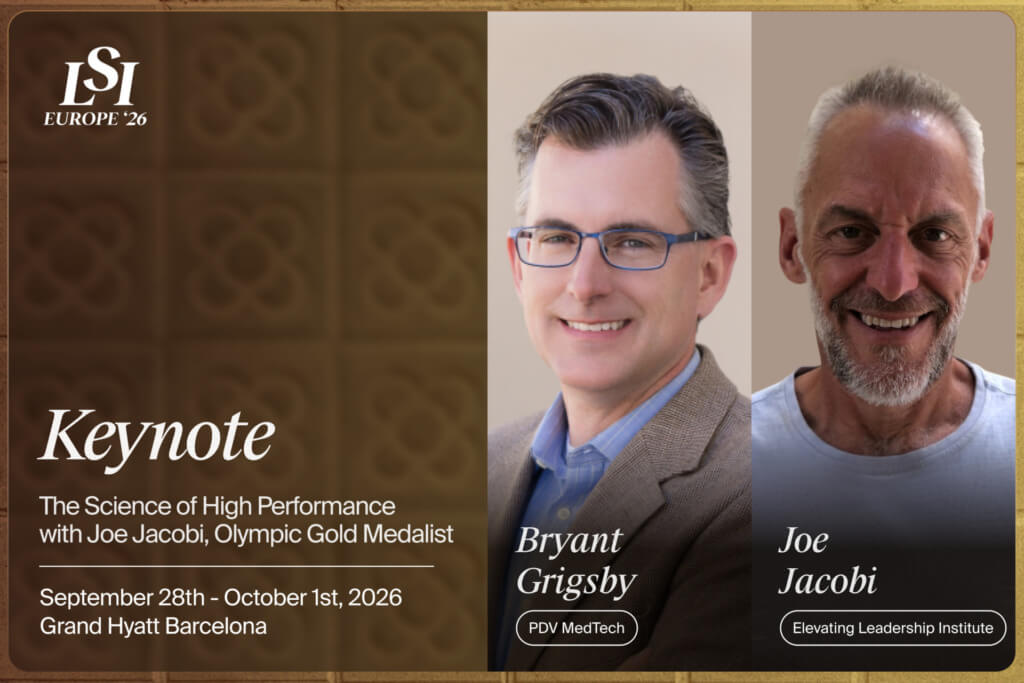
Thirty-four years after my final international competition as an athlete, one of my favorite aspects of earlier chapters of a life dedicated to high performance sport is reconnecting with past competitors, teammates, and training partners. Bryant Grigsby, along with canoe partner, Aaron Sarver, were a part of the wave of momentum that followed the US Canoe/Kayak Team's success in the 1980s and 1990s - they captured a gold medal at the U.S. Olympic Festival in 1995 and competed at the World Championships in Brazil two years later - the latter of which I was their teammate.
It's a pleasure to see the way Bryant transfers the skills and experiences from international sport to leading a MedTech company and innovating in the healthcare space... which is going to make sharing the keynote stage with Bryant at LSI Europe '26 this fall in Barcelona such a pleasure and an honor. We have an incredible experience in the works for this event - if you're in MedTech, join us in Barcelona this autumn!
Following The Flow
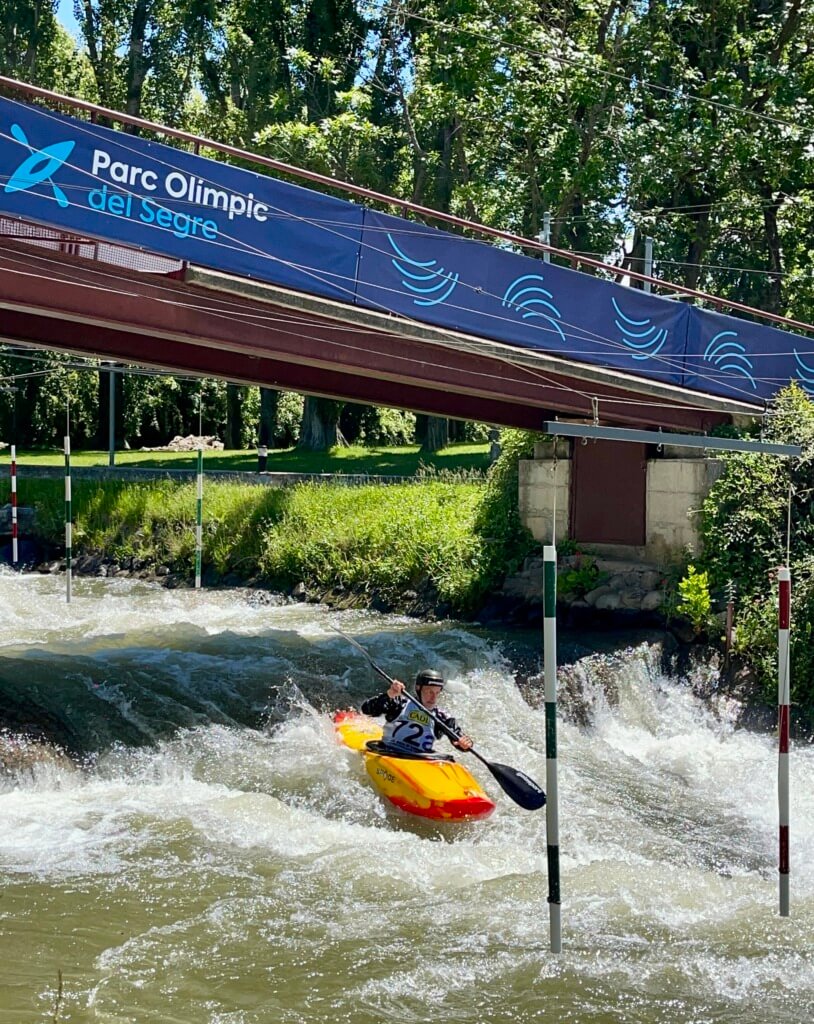
As we make our annual migration from the Pyrenees mountains to the seaside of the Costa Brava, what a season on the river over the past few months.
For the first time in many years, I came back to paddling the plastic kayak on whitewater... conveniently next to my home on the 1992 Olympic channel and one of the venues for my adventure coaching retreat this autumn. I shared a post on LinkedIn that features some nice POV video from the kayak. Watch the video --> HERE. And click on the photo below to a recent Instagram post.
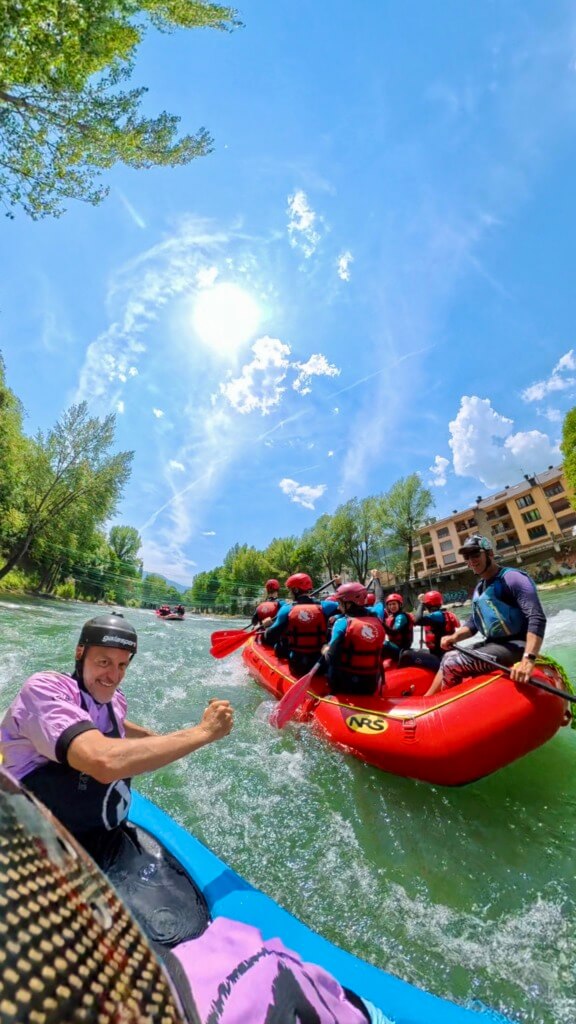
Also, Maria and I had some beautiful weekends in the doubles canoe over in Sort on the Noguera Pallaresa River. The paddling scene there is extremely social and fun as you can see via the via this IG reel - just click on the photo...
The Dark Side Of The Wave
I share just a select few essays from my Thinking In Waves collection here on the website. After a insightful and inspiring conversation with a friend from the outdoor industry, plus a wonderful response from readers, I decided to make this one public - please enjoy The Dark Side Of The Wave --> HERE.
If you're not subscribed to Thinking In Waves, you're missing out on my best writing. Easy to subscriber --> HERE.
Think Like An Olympic Champion
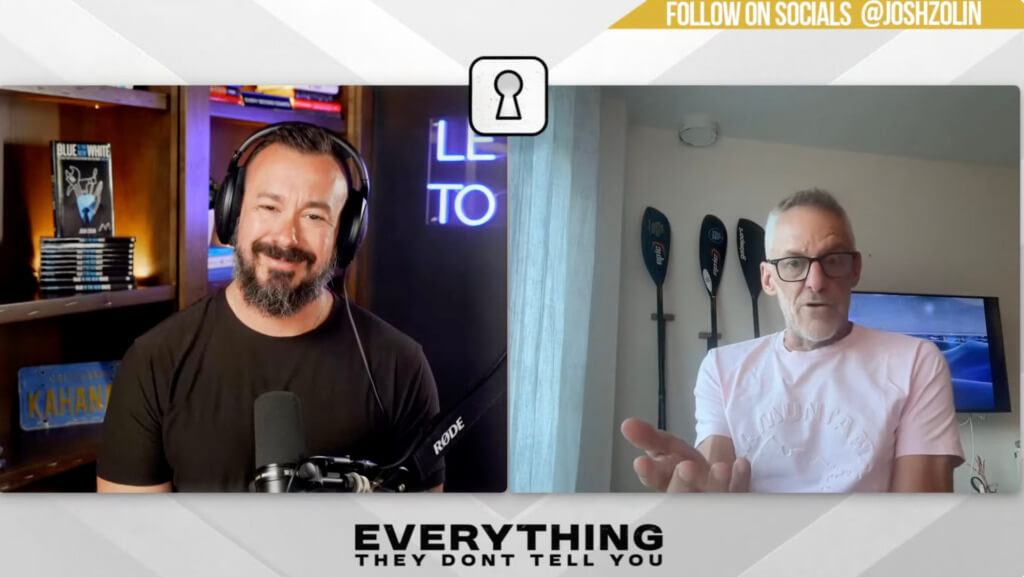
As I have participated in many podcast conversations, I think this one with Josh Zolin on the Everything They Don't Tell You Podcast is going stick with viewers and listeners for a while. It's a little longer than usual (97 minutes) but the themes, ideas, reflections, and prompts are clear and transformative.
I created single place to watch, listen, and get the resource page --> HERE. Or click on the image to watch on Youtube now.
Collaborations
Two collaborations in which I'm investing more time, energy, and resources are:
- Elevating Leadership Institute (ELI): As co-founder of ELI, we are transitions partners for executive teams ready to scale. Our coaching and facilitation is anchored in the principles and our personal experiences and success in high performance sport. While most leaders focus on wanting their teams to “play better together,” ELI dives much deeper into the team architecture using proprietary models, systems and curriculums tested and proven on the world’s biggest stages - in sport and business. More about ELI coming to this space soon but if you are a part of or leading a forward-thinking team that is ready to develop and grow its people, our program is a game-changer in this space.
- Rios Lodge: This remote riverside retreat on Costa Rica's Pacuare River makes me smile every day... because of the smiles and reviews I see from our guests. I joined the ownership group of Rios Lodge a few years ago and since then, I've watched our leadership make improvements that are as good for the land as they are for our guests. The majority of our clients are retreat leaders who want to immerse their groups in Costa Rica's lush rain forest and enjoy a space that fosters disconnection and transformation. I look forward to hosting my own retreats here soon!
Joe Jacobi
Olympic Gold Medalist, Performance Coach & Author
Unlock Your Why, Achieve Impacting Wins, & Ride Spectacular Life Waves
Ready to position the art of surfing waves as a process for deep reflection and meaningful life transitions?
Subscribe to Thinking In Waves, my short weekly essay about the lessons and experiences that I learn surfing offshore waves on a surfski kayak transferred to an innovative model for clear thinking and better choices <— Short, fun, and memorable - new riders are always welcome!
What follows below is the framework I use for my personal journaling. Its origins stem from the framework I used when I was 12 years-old and started to keep a training log for my development as a canoeing athlete… and continued to use through our success at the 1992 Olympic Games.
In 2013, I transitioned it into a more practical use for adult life. It’s gone through some iterations since then but the basic practice that you see below is what I use now even though it is still evolving!
There is no obligation to use these exact questions but my hope is that this will help you to get started and ultimately find a rhythm and format that best serves you.
In this practice, I am mostly guided by a few questions in which I write for a few minutes in the morning and then a few minutes in the evening. But as there are no set rules to this, you can choose to write one time per day, mix the questions up, or do something more free-flowing like, "Today I feel..."
Here are the basic questions and framework that I use to guide my own writing:
Morning Journaling
Daily Practice
The first section of the practice is guided by two areas - purpose and guideposts.
I write my purpose (the same purpose each day) first thing at the top of the page. Finding and identifying purpose is a deeper topic, but journaling is a great place to experiment and see what feels good to you.
Just below purpose, I choose a few key elements of my day and pursuits that support my purpose - I call these guideposts as when practiced, they help establish my daily path. Beside each guidepost, I write out a short series of five-six values that are like a word map for each guidepost. Then, I move into the Morning Questions.
The Daily Practice part of my journal writes like this:
Purpose
Enjoy this experience through the full engagement of connection, creativity, health, and wealth.
Guideposts
Outlook: awake, love, curious, simple, equilibrium
Energy: set, move, nature, flow, replenish, whole
Coaching: listen, ask, connect, trust, collaborate, evolve
Create: reflect, develop, align, sharpen, patience, share
Morning Questions
Unlike the Daily Practice section above which remains the same each day, the following questions tap more into where I am and how I am feeling at this moment in time.
What is my outlook for the day?
This is not a task list but more like overarching themes and high level aspirations. Think about what kind of attributes this day is asking you to bring forward?
I tend to stick pretty close to the same values each day that correspond with the most elements of my day (actions and/or roles) - sort of like a daily reinforcement.
T.O.M? (short of "Top Of Mind")
This can be one of the more challenging spaces in my journaling practice but one of the important additions to the practice. Simply said, this is the space to move my current feelings, thoughts (and thought loops,) or mood on to paper and reflectively expand on them via a few sentences (or more if desired.) No judging or changing - just noticing and accepting.
Naturally, this space varies a lot every day. But, over time, being able to see that gap between aspirational values and current state every day has been immensely helpful in making daily decisions.
Relationship Focus?
This is placing a little bit of intention and attention towards the people of most importance and people with whom you might interact that day.
For what I am grateful?
Just a simple gratitude prompt.
Typically, my morning journaling practice takes about 5-10 minutes.
Evening Questions
What went well today?
What could have gone better?
What's a reinforcing choice I made today? (an action that reinforces the bigger picture and the right direction)
Who did I serve today?
The evening practice usually takes no more than 5 minutes. One interesting note about the evening journaling - back in September of 2021, I started to do this in a notebook that allows me to journal about the calendar day in the same space for a few years. So now, in mid 2023, my evening journaling takes place directly under the same entry I wrote on the same day a year earlier - something I'm enjoying a lot!
– – –
You can use all or some but ultimately, if you try journaling like this, evolve the practice into making it your own. I believe that using a framework like this one can be a nice start though.
I also find that writing with a pencil (or pen) on real paper feels good for me. The act of moving the pencil across paper has a nice flow to it and something different than tapping characters on a phone or keyboard.If you begin, I'd encourage you to start small but do a little every day. No judging what you write - just observe and notice. Please give the exercise a few weeks to develop some feel.
Of course, please feel free to ask any questions and please feel free to share any progress or feedback too - joe@joejacobi.com
Thank you for reading!
With gratitude, Joe
Joe Jacobi
Olympic Gold Medalist, Performance Coach & Author
Unlock Your Why, Achieve Impacting Wins, & Ride Spectacular Life Waves
Ready to position the art of surfing waves as a process for deep reflection and meaningful life transitions?
Subscribe to Thinking In Waves, my short weekly essay about the lessons and experiences that I learn surfing offshore waves on a surfski kayak transferred to an innovative model for clear thinking and better choices <— Short, fun, and memorable - new riders are always welcome!
Latest Blog Posts
(Orginally published May, 2022)
Bunched together shoulder-to-shoulder in a cobblestone alley, the race director shouts the final instructions about what's going to happen next. My Catalan has improved over the five years I've been living here but I am still far from understanding everything.
However, I do have some idea about what is going to happen next...
About 130 runners, myself included, are going to dash out of this alley and make a quick left turn on to the main road that runs through the Catalan village of Organyà. After 50 yards of running slightly downhill, we will make a 90-degree turn to the right, and then... no more downhill or flat ground for the rest of the race.
The course is short in distance... just 2.6 miles.
But its challenge is that it goes up. Way up.More specifically, two thousand and two hundred feet up.
###
A major part of my adaptation to life in Catalunya has happened through running. Monday through Friday, the people I see, the routes I run, and the time of day I choose to exercise all contribute to how I experience Catalan culture, nature, and values.
Once in a while, I'll sign up for a race. Racing is an exercise that exchanges elements of running that I normally control for the opportunity to gauge my response to different elements of running outside of my control.
Today is one of these race days - the Arruix Santa Fe, which begins in Organyà. Although the finish line is not far from the start, the first clear view of the mountain-top finish does not come into sight until that hard right turn that takes us out of the village.
Good rhythm and flow has me feeling strong through several hundred meters of mildly uphill terrain. Then, the dirt road narrows to a single-track path and turns steeply upward. Here, the group's pace will slow and passing will be more difficult.
The paths in this part of the Pyrenees are defined by loose rocks, exposed roots, and tight switchbacks. As we move up the mountain, I vividly recall past ascents here - the awkwardness and discomfort of my feet stumbling over these trails as if I was fighting with the ground. My then default? Turn up the grit mode and soldier on.
But on this particular afternoon, I notice precision - each foot lands in small but stable spaces between the obstacles that naturally propel the next step.
For the first time, this ground feels like home.
The moment is not comfortable... yet, I am savoring it.
###
The coolest part of the Arruix Santa Fe is its finish.
After passing the final 200 meters over slanted, slick limestone, a tiny chapel sits just before you. Don't stop before the first door... run through this doorway, through the chapel, and the organizers will stop your running time just as you pass through the second doorway...
Which leads you down a few stone steps and onto an outcropping overlooking the beautiful valley below.
It takes a few minutes to catch my breath. I drink some water and start to congratulate the people in my immediate group with whom I just shared this ascension.
I feel good about my performance. But, I am curious... besides how I feel, how well did I perform? For one clear reason, I can not answer this question.
###
At home later that evening, I open my computer to look at the results from the race that just happened. I placed 34th overall and covered the course in 39 minutes and 7 seconds, exactly 10 minutes behind the race winner.
I still feel good about the race but this tells me very little about how I performed.
My inability to connect the performance dots here can be attributed to an experiment that I never expected to last this long:
Do not take nor wear any technology on a run.
Not a watch. Not a heart-rate monitor. No phone, airpods, podcasts, nor music.
For more than three years and counting now, while running on average five days per week and sometimes with lofty goals, I have not taken in a single metric from technology that could reveal something about or influence my running performance.
Running without technology may come across as a little bit extreme for someone who is serious about running. But in earlier chapters of life, my intake of data was extreme. It was embedded into many parts of my Olympic canoeing journey. Perhaps this shift from "A Lot" to "None" is a form of recalibration. Of rebalancing. Of a different way to compete in a new chapter of life.
Which gets me thinking about the last time I did wear technology during my training runs... three years earlier right around the time of this same race.
I remember this time well because I had just completed the 2019 Boston Marathon a few weeks earlier and had been taking in a lot of data points such as pace, distance, and elevation to name a few.
I remember this time well because I was going through several important changes that amounted to a major life transition.
I remember associating metrics as the reliable indicator of improvement... or lack thereof.
So, I go back into Arruix Santa Fe website, look up the 2019 results, and locate my time:
39 minutes and 1 second.
Three years later, my time up the mountain in 2022 is 6 seconds slower.
###
Now, you could be thinking, "Aren't you disappointed you went SLOWER?"
Or maybe, "What's the plan now? How are you going to go faster?"
If I did entertain these thoughts, they fade quickly.
Three years after having started this experiment, I have learned about different ways that progress can be realized... and ways that progress is hidden from us.
###
Not long after the 2019 race, I challenged the deep intake of such metrics. I evaluated the grip of data. I started to wonder what freedom might be realized if I just let go? What would I notice if I am not noticing technology?
The technology forces at large vigorously compete for your attention. Look at how ridiculously easy, convenient, and cheap it is to download their apps that place your attention on their dashboard.
Conversely, how many forces at large - of any kind - encourage you to "Let Go" and tune into your own dashboard? To disconnect and disengage? To subtract rather add?
Maybe there's a compelling reason for tracking more information about performing better - in sport, in business, in relationships, or in life. If you know the outcome you want, information distilled from technology can be helpful at times.
However, metrics are also weights. They don't make the journey up the mountain on their own. Someone carries them. And that someone is you. Specifically, your attention bears this load... at the expense of not engaging with other unique parts of your journey. Attention is a poor multi-tasker.
Before you measure everything - or anything - it is worthwhile to consider this weight and ask, "What is the cost of tracking data and carrying metrics?"
Because...
If you had told me three years ago that the price of increased presence in my life, relationships, work, and health aligned with a better disposition for enjoyment would amount to an additional 2 seconds per year for three years, I would simply ask this question:
Where can I buy an additional 6 seconds?
With gratitude,
-Joe
Joe Jacobi
Olympic Gold Medalist, Performance Coach & Author
Unlock Your Why, Achieve Impacting Wins, & Ride Spectacular Life Waves
Ready to position the art of surfing waves as a process for deep reflection and meaningful life transitions?
Subscribe to Thinking In Waves, my short weekly essay about the lessons and experiences that I learn surfing offshore waves on a surfski kayak transferred to an innovative model for clear thinking and better choices <— Short, fun, and memorable - new riders are always welcome!
(Published September, 2021)
Upon completing my 52nd lap around the sun, I thought to share some reflections that feel relevant at this moment in time.
These reflections may sometimes appear to contradict each other. But, as I have considered and embraced each one along my journey down the river, I hope that one of them, perhaps more, offers you an interesting perspective here at the start of autumn… as they have for me.
Resets
- What if we reset our year in the autumn instead of January?
- What if Fridays mark the beginning of our week with two restful days instead of the weekend marking the end of our week?
- What if we reframe a finish line as the next start line?
- What do we notice when we stop noticing what we are measuring?
- Instead of pushing away negative or challenging feelings, what if we acknowledge them where they are?
- How could we focus on moments instead of months? Or weeks? Or even days?
- Which parts of our default belief system have been left unchecked for a long time?
- Instead of a destination, what if we focus on incremental movement every day?
- How would our resets change if we consistently take small steps as opposed to trying big leaps?
- How would our resets change if we are guided by what we want?
- What is good about right now?
Life As A River…
12. How would we change if we consider that a “timeout” does not really stop time?
13. A) What if we focus on how to collaborate with the rocks in our river instead of trying to eliminate them?
14. B) Are we confusing rocks with river current? And river current for rocks?
15. What if we sustain minimum speed without stopping as opposed to pursuing top speed with frequent stops?
16. What if successful navigation is less about making moves and more about better anticipation and correction of mistakes?
17. How often do we practice for making mistakes?
18. Can we find humility in the mildest stretches of the river ?
Health, Capacity, & Energy
19. What if we replaced “How can I find more time?” with “How can I better replenish and expend energy?”
20. How can we position ourselves to better leverage transfers of energy between us and unexpected and uncontrollable forces of power?
21. What if we spend the first five minutes of our day tuning out the voices of others and tuning into our own voice?
22. What if we choose rest?
23. What if we choose solitude?
24. A) When we are feeling bad, what if we serve someone else?
25. B) When we are feeling bad, what if we serve something bigger than ourselves?
26. Could the improved health of any collective community or society to which we belong or about which we care begin with improving with our own health?
27. A) If we keep moving up and up and up the mountain, where will we find the open space and oxygen to reset and grow?
28. B) Is there an an option to descend a few steps down the mountain before ascending again?
29. When we want to feel more present, what is the most accessible and free first step?
30. What if patience becomes one of our superpowers?
Relationships
31. What can we change about our environment that would facilitate better relationships?
32. Could the impact of deeper relationships with fewer people exceed the impact of shallow relationships with many?
33. Is there a collaboration of goodness to be cultivated with others who seem to operate at the opposite end of the spectrum as we do?
34. A) What are the circumstances that make it more challenging for them?
35. B) How can we better convey to them that we see their circumstances?
36. How can we get outside of our own bubble?
37. What if we send more messages to people who make (or made) a difference in our lives?
38. Is our relationship with nature held to a similar standard to that of a good friend?
39. Is our relationship with ourselves held to a similar standard to that of a good friend?
Perspective
40. Can we more frequently ask ourselves, “Could the opposite be true?”
41. What if we hold our “rules for living” with a loose grip instead of a tight one?
42. If we could only improve by subtraction, what would we subtract?
43. What if it is not a marathon but instead a series of short sprints?
44. If it is possible that nobody will remember, what would we be free to do?
45. How could life be different if we pair grit, resilience, and determination with catching our breath, the beauty of imperfection, and self-kindness?
46. Instead of trying to outrun our current situation to gain new perspective, what if we slow down to gain a new perspective?
47. How can we be more gentle with ourselves right now?
48. A) For what are we grateful?
49. B) What if we ask this “gratitude question” every day?
50. What if we let go?
51. What if we embrace all that we have and who we are while focusing less on what we want and who we hope to be?
52. How can we reframe our outlook about life as a series of questions?
With gratitude,
-Joe
Joe Jacobi
Olympic Gold Medalist, Performance Coach & Author
Unlock Your Why, Achieve Impacting Wins, & Ride Spectacular Life Waves
Ready to position the art of surfing waves as a process for deep reflection and meaningful life transitions?
Subscribe to Thinking In Waves, my short weekly essay about the lessons and experiences that I learn surfing offshore waves on a surfski kayak transferred to an innovative model for clear thinking and better choices <— Short, fun, and memorable - new riders are always welcome!
What's at the core of
Exploring better rides on Life's Waves?
For me, it's staying curious about
The conditions that create
Enjoyable experiences
On Life's Waves
That simplify the acquisition of
Free Energy.
To want more
Or any
Free Energy
Does not imply
Nor satisfy
Laziness.
Quite the opposite…
Free Energy intensifies the desire for leverage
In the pursuit of something
Meaningful
Game-changing
And
Otherwise complicated.
This prompts a question for me:
How can we prepare ourselves to be more receptive to a wave's Free Energy?
Asked a little differently,
What are we doing that might be repelling Free Energy from our rides?
Free Energy exists on the same side of the coin as the State of Flow.
Like Flow, Free Energy
Does NOT care about:
Personal bests
Scoreboards
The next salary increase or promotion
Status
Recognition
Nor
Influence.
Free Energy steers clear of
Rigidity
Expectations and
Despair.
Instead,
Free Energy
Flows freely towards
Mindsets and behavior shifts that foster
Learning and Improvement
Underpinned by Patience.
Here,
Free Energy becomes
Leverage for
Skill
Joy
Letting Go.
Put more succinctly,
Connecting with Free Energy is
To be Aware.
What is the best way to open ourselves to Free Energy?
No matter how challenging Life’s Waves are breaking?
Subtract noise and clutter
That block
Awareness.
With gratitude, Joe
Joe Jacobi
Olympic Gold Medalist, Performance Coach & Author
Unlock Your Why, Achieve Impacting Wins, & Ride Spectacular Life Waves
Ready to position the art of surfing waves as a process for deep reflection and meaningful life transitions?
Subscribe to Thinking In Waves, my short weekly essay about the lessons and experiences that I learn surfing offshore waves on a surfski kayak transferred to an innovative model for clear thinking and better choices <— Short, fun, and memorable - new riders are always welcome!
If I could one podcast for value, insight, and direction, this conversation with Michael O'Brien would be it.
Watch HERE:
Listen To Our Conversation:
Joe Jacobi
Olympic Gold Medalist, Performance Coach & Author
Unlock Your Why, Achieve Impacting Wins, & Ride Spectacular Life Waves
Ready to position the art of surfing waves as a process for deep reflection and meaningful life transitions?
Subscribe to Thinking In Waves, my short weekly essay about the lessons and experiences that I learn surfing offshore waves on a surfski kayak transferred to an innovative model for clear thinking and better choices <— Short, fun, and memorable - new riders are always welcome!